
The world is like a game of chess,
yet not everyone holds a piece.
More often, people are part of the board itself—
pushed and shifted,
mistaking that movement for choice.
Being trapped between advance and retreat
is not because the road ahead is perilous,
but because the human heart is too impatient.
Before one step is steady,
the mind is already gambling on three moves ahead.
Before the game is finished,
one has crowned oneself a god—or condemned oneself a sinner.
So retreat feels too slow, advance too late,
and when both sides are difficult,
responsibility is handed to fate,
imbalance blamed on the times.
But the chessboard never blames the player.
It is the player who wants to win the whole game
with a single piece.
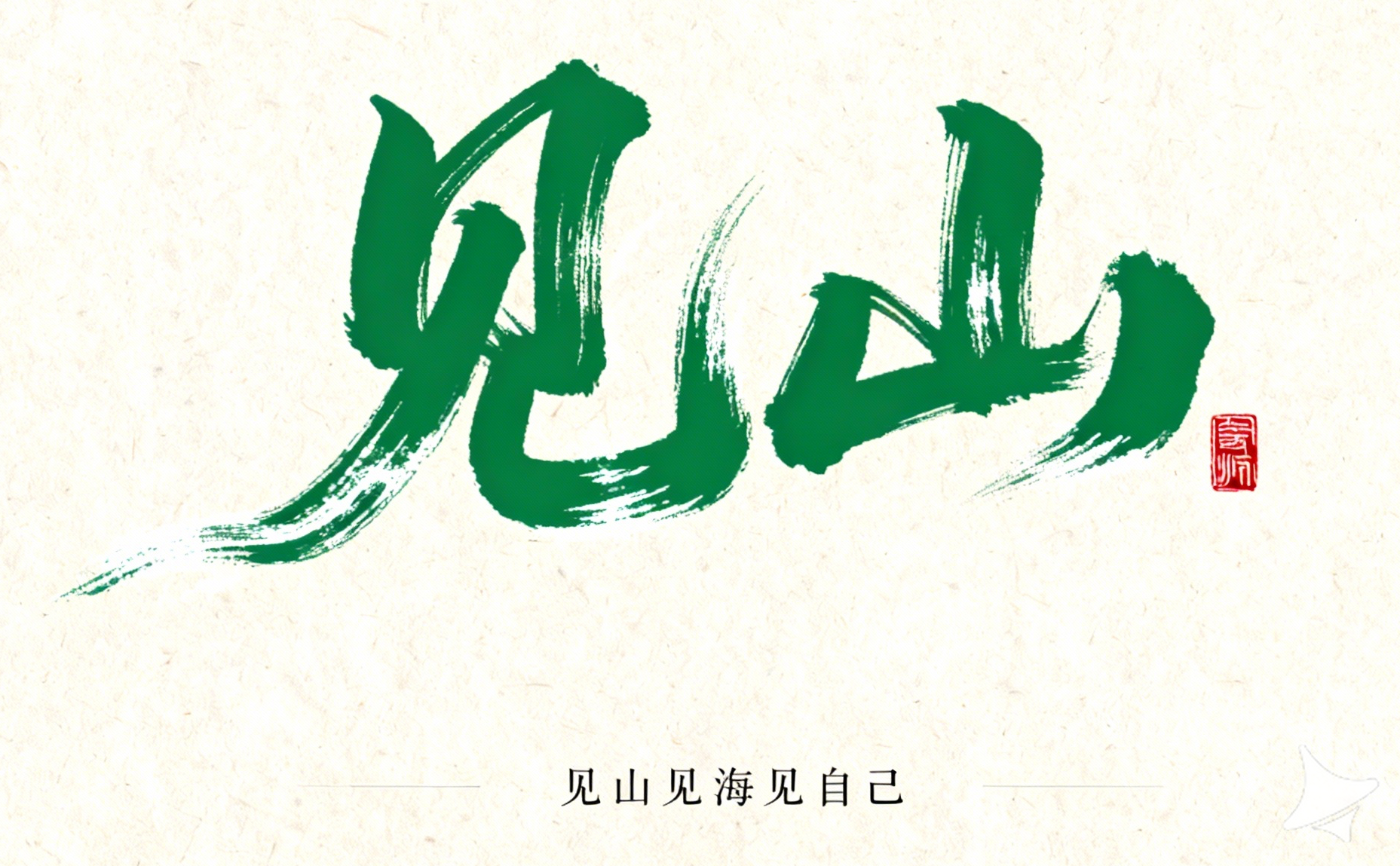
One mountain follows another—
not to urge you higher,
but to remind you where to stop.
How many climb the first mountain
and believe they have reached the peak;
how many stand halfway up
and already look down on the world.
They do not realize that true height
lies not in vision, but in the capacity of the heart.
Mountains beyond mountains are not a threat,
but a measure—
they tell you the world does not unfold around you.
Watching the warmth and cold of human affairs too long
can make a person cold.
Not because the world lacks feeling,
but because prolonged spectatorship
creates the illusion of transcendence.
You think yourself an observer,
forgetting you are also inside the game.
You comment on others’ joys and sorrows,
yet avoid speaking of your own numbness.
You can judge the world,
but cannot bear its consequences.
Warmth and cold are never in the heavens,
but in people.
When the human heart loses its warmth,
heaven and earth turn cold.
The masses pray every day.
Some ask the gods for fairness,
some demand reward,
some beg for miracles,
some only wish things would not get worse.
They forget that if gods truly exist,
they are merely shadows cast by human hearts.
What answers prayers is never an echo from above,
but action taken below.
Prayer without responsibility
is just another form of escape.
Handing choice to destiny
is the easiest way to shed blame.
A thousand thoughts with no one to confide in—
this is the normal state of adulthood.
Not because there are no words,
but because one knows words will change nothing.
The true distance between people
is not misunderstanding, but understanding.
You know the other cannot hear,
you know the other does not wish to hear,
you know speaking will only drain you further.
So silence is mistaken for maturity,
suppression praised as composure.
But prolonged silence
eventually becomes sorrow—
not an explosion,
but a collapse.
Lamplight and yellowed pages
do not necessarily illuminate a person.
They can be cultivation, or escape;
self-reflection, or self-entrapment.
Some seek truth in books,
others hide from reality within them.
Pages know neither good nor evil,
light discerns neither right nor wrong.
Whether you are illuminated
depends on whether you dare close the book
and return to the world.
True cultivation
is not withdrawal from the world,
but self-mastery after re-entering it.
At this moment, seeing the mountain as not-mountain
is not mysticism,
but the breaking of appearances.
You finally realize that achievement, identity, labels
are merely temporary names assigned by society.
They can be exchanged for resources,
but cannot define who you are.
You begin to doubt what you once believed without question,
and to admit the hollowness you long ignored.
This is a dangerous stage.
For once one sees through,
yet has not rebuilt,
one easily falls into nihilism.
So you must take one more step—
not backward,
but deeper.
Until moonlight first touches the green river.
This is not a moment of victory,
but a moment of quiet.
You no longer rush to prove,
nor hurry to deny.
You acknowledge the waves,
but are no longer swept away by them.
You know where anger comes from,
and where it should go.
True anger is not noisy.
It is steady, restrained, directional.
Anger is not for destruction,
but for correction.
Not an outward release,
but an inward confirmation of boundaries.
It tells you what must no longer retreat,
what must no longer be endured.
It is not a flame,
but a thermometer—
when it appears,
the system has already gone off course.
In this life, one must learn three things:
to recognize, within the game, that you are not a god;
to admit, before the mountains, that you are still on the way;
to preserve, between warmth and cold,
a heart that is not worn away.
If you can do this,
then even if the world remains chaotic,
even if mountains and rivers overlap without end,
you will not be lost.
For you have seen the mountain,
and then seen the mountain again.
—and this time,
you know how to walk.